Tarmac
Tarmac is the familiar name used for asphalt driveway surfacing. A properly constructed asphalt driveway combines a compacted formation and sub-base with one or more bound asphalt layers to create a practical, hard-wearing finish.
- Efficient for larger, straightforward vehicle areas
- Needs secure edges and a well-compacted foundation
- Can be combined with block-paved borders
- Performance depends on layer thickness, temperature and rolling
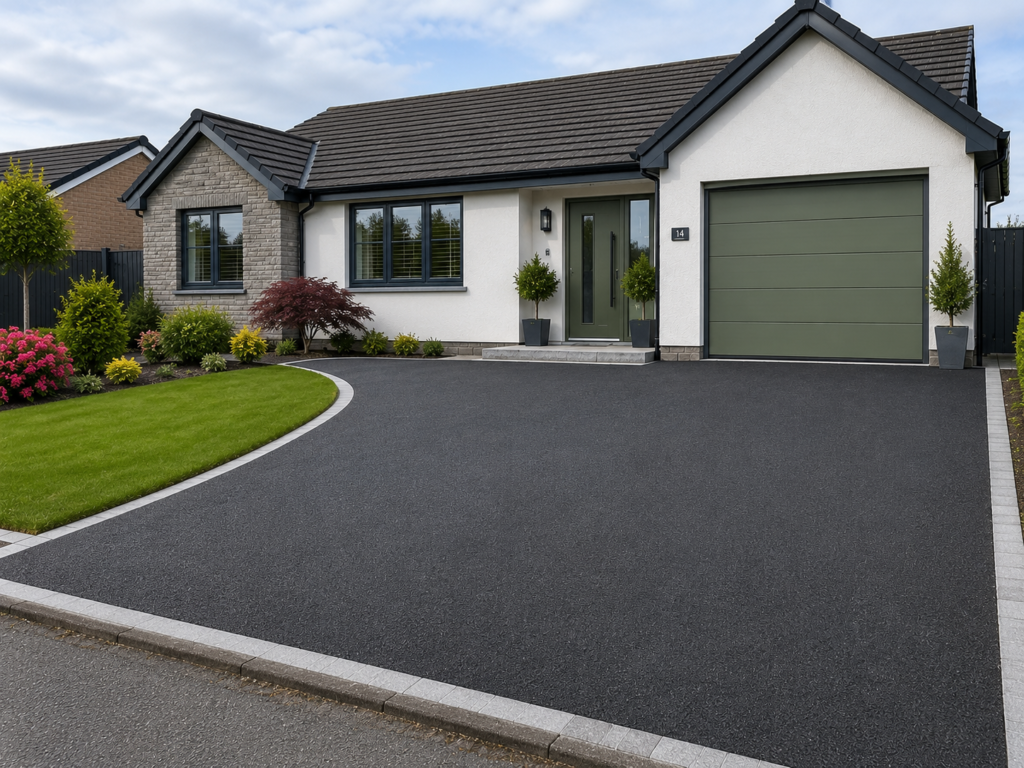
What a tarmac driveway is
Modern driveway “tarmac” is generally an asphalt product made from graded aggregate bound with bitumen. It is delivered hot, laid to the required thickness and compacted while it remains workable.
The visible surface is only the top part of the system. Long-term performance depends on the ground below, the compacted sub-base and any base course specified beneath the final surface course.
Where it works well
Asphalt is well suited to medium and large driveways, long entrances and parking areas where machinery can gain reasonable access. It creates a clean, continuous surface and can be quicker to lay than highly detailed block paving.
Very small areas, tight corners and sites with poor machine access require more hand work and can be less economical. Decorative borders are often used where owners want more visual detail or stronger edge definition.
What affects the price
Area, excavation, disposal, sub-base depth, asphalt layer specification, access, edging and drainage are the main cost drivers. Large open areas can be laid and rolled efficiently, while narrow or fragmented areas take longer.
The quotation should separate a simple resurfacing overlay from a complete reconstruction. An overlay can be appropriate over a sound asphalt base, but it will not correct deep movement, poor levels or a failed foundation.
Construction layers
The installer should remove unsuitable material, compact the formation and install a suitable granular sub-base. Depending on the design, a bound base course may be added before the final surface course.
Asphalt must be laid at the correct temperature and compacted thoroughly with suitable rollers or plates. Thin hand-laid patches over unstable ground are more likely to deform, crack or break at the edges.
Edging and thresholds
Asphalt needs positive edge restraint because unsupported edges can crumble under wheel loads. Concrete kerbs, block-paved borders or other engineered restraints are commonly used.
Levels at garages, gates, pavements and drainage channels must be planned before laying. The finished surface should not trap water against buildings or create an abrupt lip at the highway boundary.
Drainage and falls
Standard asphalt is generally impermeable, so the driveway requires controlled falls to channels, gullies or permeable landscaping. Porous asphalt systems are available but require a completely different open-graded construction beneath.
Ask where rainfall will flow during heavy weather and how water will be prevented from reaching the public road, neighbouring land or the building threshold.
Appearance and options
Black is the standard finish and gradually weathers to a softer grey. Red asphalt may be available in some areas, and block borders can add colour and define the edges.
A smooth domestic surface should still provide suitable texture for grip. The final appearance can vary with aggregate type, compaction and hand-finished details.
Maintenance and repairs
Keep channels and gullies clear, remove oil or fuel contamination promptly and address cracks before water reaches the lower layers. Heavy point loads, turning wheels and hot-weather loading can mark a newly laid surface.
Local patches are possible, although they are usually visible. A future surface course can sometimes renew a structurally sound driveway without complete excavation.
Questions for the quotation
- Is this a full reconstruction or an overlay?
- What compacted sub-base, base course and surface course thicknesses are included?
- Will the asphalt be machine laid and mechanically rolled?
- Which edge restraints and drainage components are included?
- How long before vehicles can use the surface?
- Are excavation, disposal and VAT included?
Tarmac cost scenarios
These worked examples use the current tarmac rate of £45 per m² and the same preparation and fixed-cost allowances used by the estimator. They are illustrative ranges, not contractor quotations.
Small single-car driveway
25m² · A sound existing base, straightforward access and no additional drainage work.
Standard two-car replacement
50m² · Existing tarmac removed, normal access, waste taken away and a drainage allowance included.
Large and more complex installation
80m² · Existing concrete removed, restricted access, waste and drainage allowances, plus a gentle slope.
Actual quotations can change after a site survey, specification choice, regional labour and supplier pricing, drainage design and ground-condition checks.
Peace of Mind from Estimate to Completion
Your Peace of Mind Project Tracker keeps the important stages, updates, photographs, documents and payments together, helping you understand what has happened and what comes next.
The material guide helps with the early decision. The accepted installer quotation and project specification remain the documents that define the work.
Estimate a tarmac driveway
Enter the property, approximate area, existing surface and access details to receive an indicative price range.
Start an estimateCompare driveway costs