
A resin-bound driveway is made by mixing clean, dried aggregate with a clear resin before the mixture is hand-trowelled over a stable base. It produces a smooth decorative surface with no loose stone and can form part of a permeable system when every construction layer is designed correctly.
Resin-bound
A resin-bound driveway is made by mixing clean, dried aggregate with a clear resin before the mixture is hand-trowelled over a stable base. It produces a smooth decorative surface with no loose stone and can form part of a permeable system when every construction layer is designed correctly.
- Smooth decorative finish with a broad choice of aggregate blends
- Can be permeable as part of a correctly designed full system
- Requires a stable and compatible base
- Resin-bound and resin-bonded are different products
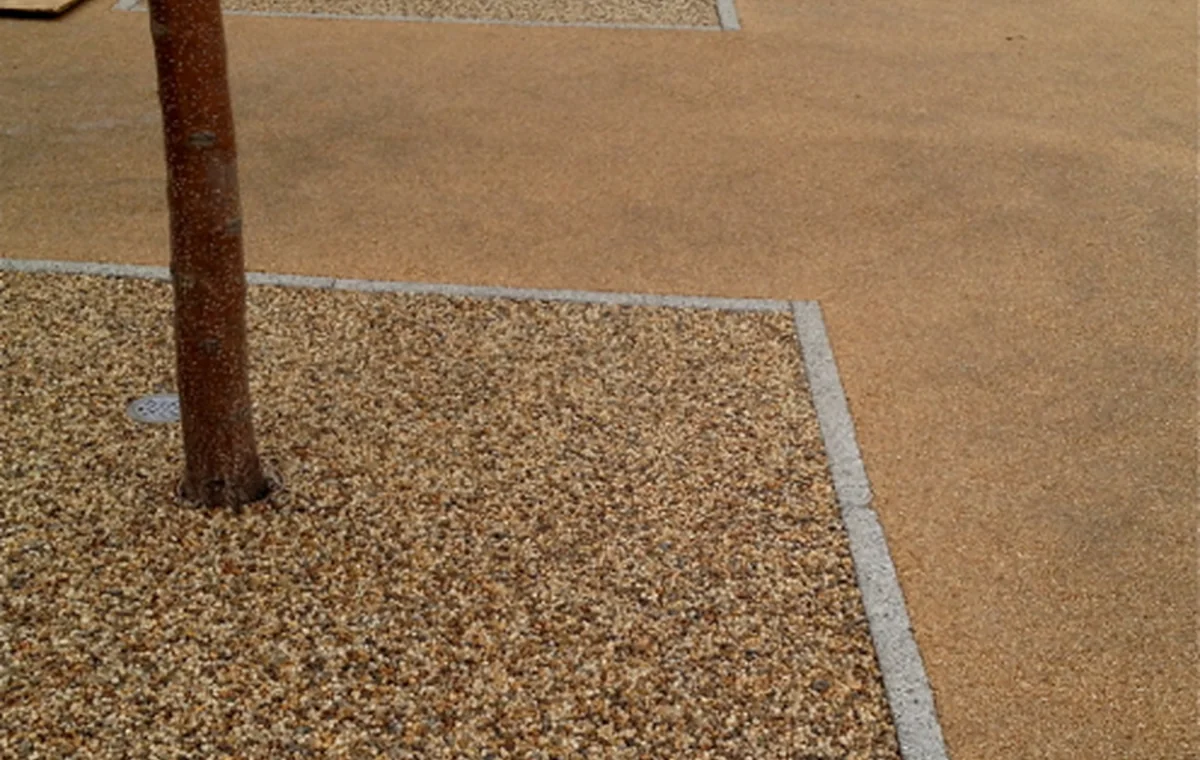
What resin-bound means
In a resin-bound system, every aggregate particle is coated with resin before the mix is spread and trowelled. The finished layer is smooth and contains interconnected voids that can allow water to pass through.
Resin-bonded surfacing is different. Resin is spread onto a base and loose aggregate is broadcast over the top, creating a rougher appearance similar to loose stone. It is normally not permeable and has different maintenance and performance characteristics. The quotation should identify the system clearly.
Where it works well
Resin-bound surfacing suits contemporary properties, curved driveways, paths and areas where a smooth low-loose-stone finish is preferred. Aggregate colours can be chosen to complement brick, render, roof tiles and landscaping.
It is not a shortcut for covering a failed driveway. Cracked concrete, moving blocks or a weak sub-base can transmit problems into the resin surface. The installer should explain whether the existing base can be retained and why.
What affects the price
Aggregate blend, resin quality, layer depth, edging, base construction, area shape and the amount of preparation all affect the price. Small areas, narrow access and detailed work around steps or covers often increase the labour cost per square metre.
An overlay over a sound base may cost less than a complete excavation and new asphalt or concrete base. However, an inexpensive overlay is poor value when the underlying surface is unstable or does not provide the required drainage performance.
Base and construction
The resin layer needs a firm, clean and compatible base. New installations commonly use an engineered asphalt or concrete base built over a compacted sub-base. The base must be structurally sound, correctly levelled and free from contamination.
Mixing ratios, aggregate dryness, weather conditions and trowelling consistency all matter. Resin can react badly to moisture during installation, so the contractor should plan around suitable weather and follow the product system instructions.
Permeability and drainage
A resin-bound surface can allow water through, but the driveway is only genuinely permeable when the base and sub-base also permit storage and infiltration. Laying permeable resin over impermeable concrete does not create a fully permeable construction.
Where the base is impermeable, falls and drainage channels may still be necessary. Ask the installer to show the route water will take from the finished surface to its final destination.
Colour, edging and details
Natural aggregate blends range from pale gold and silver-grey to darker granite tones. The finished colour is influenced by aggregate, resin and daylight. View completed outdoor projects rather than relying only on a small sample tray.
Strong edging contains the trowelled layer and provides a clean line around borders, channels and paving. Details around garage thresholds, gates and manhole covers should be agreed before installation.
Maintenance and lifespan
Regular sweeping removes leaves and dirt before organic matter becomes embedded. Gentle periodic washing can control moss and surface contamination. Oil, fuel and chemical spills should be cleaned promptly using products suitable for the resin system.
A correctly specified surface can remain attractive for many years, but local repairs may be more visible than repairs to block paving. UV-stable resin and suitable aggregate help reduce discolouration, while poor installation can lead to loose stone, cracking or patchiness.
Common problems to avoid
Frequent concerns include overlaying an unsuitable base, installing in damp weather, inconsistent mixing, insufficient depth, poor drainage and weak edges. Shiny or uneven patches may indicate trowelling or resin-distribution problems.
Ask for the named resin and aggregate system, installation depth, base specification and workmanship guarantee. A generic description such as “resin drive” does not provide enough information to compare quotations.
Questions for the quotation
- Is the proposal resin bound or resin bonded?
- What base will be retained or constructed beneath the resin?
- Is the complete build-up permeable, and where will water go?
- Which resin manufacturer, aggregate blend and finished depth are included?
- What edging, drainage and manhole details are included?
- What product and workmanship guarantees apply?
Estimate a resin-bound driveway
Enter the property, approximate area, existing surface and access details to receive an indicative price range.